
.png)
.png)






Thermal Monocular with Laser Rangefinder: Is It Worth It
A thermal imaging monocular helps hunters detect wildlife in darkness and challenging visibility conditions. However, a thermal image alone does not reliably tell you how far away an animal is.
That is where a built-in laser rangefinder (LRF) can make a difference. By measuring the distance to a suitable target, it provides additional information for field observation and planning.
But is an LRF essential for every hunter, or can a non-LRF thermal monocular meet your needs? The answer depends on your hunting environment, observation distance and how often you need to measure range.
What Is a Laser Rangefinder in a Thermal Device?
A laser rangefinder measures the distance between the device and a target by sending out a laser signal and calculating the return time. When an LRF is built into a thermal imaging monocular, users can observe a target and measure its distance without carrying a separate rangefinder.
Thermal imaging and laser ranging serve different purposes: thermal sensors detect infrared radiation and display temperature differences, whereas laser rangefinders provide distance data. Combining these functions gives users a more complete understanding of what they are observing.
For outdoor users, this can be especially useful when visibility is limited and visual estimates of distance are unreliable.
Thermal With LRF vs Non-LRF: What Is the Difference?
he main difference between a thermal monocular with a laser rangefinder (LRF) and one without it is how distance is measured. Both devices detect heat signatures and support observation in low-light or dark conditions, but an integrated LRF adds the ability to measure the distance to a suitable target directly.
Feature | Thermal Monocular with LRF | Thermal Monocular without LRF |
Distance Measurement | Measures the distance to a suitable target directly | Requires visual estimation or a separate rangefinder |
Ease of Use | Combines thermal observation and distance measurement in one device | Offers straightforward thermal observation without an integrated ranging function |
Field Convenience | Reduces the need to carry and switch between separate devices | May require additional equipment when accurate distance measurements are needed |
Best Suited For | Hunters and outdoor observers who regularly need distance information | Users who mainly scan familiar areas or rarely need to measure distances |
Key Buying Consideration | Check the ranging distance, measurement accuracy and operating conditions | Focus on thermal imaging performance, field of view, weight and battery life |
Neither option is universally better. A thermal monocular with LRF is worth considering if you frequently need distance readings in the field, while a non-LRF model may be sufficient for general observation. Your choice should depend on your typical environment, observation habits and budget.
When Do You Need a Thermal Monocular With LRF?
A thermal device with a laser rangefinder is worth considering if distance measurement is part of your regular outdoor routine.
Hunting: Measure the distance to visible heat sources without relying solely on visual estimation. Always follow local hunting regulations and safe practices.
Long-range observation: Understand how far away wildlife or other heat sources are when viewing open fields, hills, or wide outdoor areas.
Complex terrain: Make better-informed decisions when observing across slopes, valleys, or uneven ground, where judging distance by eye can be difficult.
Outdoor exploration: Eliminate the need to carry both a thermal monocular and a separate rangefinder, as well as the hassle of constantly switching between the two.
If you mainly scan nearby areas, observe wildlife at short distances, or use thermal imaging for casual outdoor activities, a non-LRF model may meet your needs. The best choice depends on how often you require precise distance data.
What Should You Check Before Buying an LRF Thermal Device?
Do not choose a thermal device based on its rangefinder alone. Consider the complete system.
First, verify the device's rated ranging range and the specific conditions required to obtain valid readings. The maximum rated range does not guarantee reliable measurement of all targets at that distance; factors such as target size, surface characteristics, weather, and environmental conditions all influence ranging performance.
Second, compare the thermal sensor resolution, lens specifications, field of view, image quality, and device weight. These features influence what you can see, how you scan an area, and how comfortable the device is to carry.
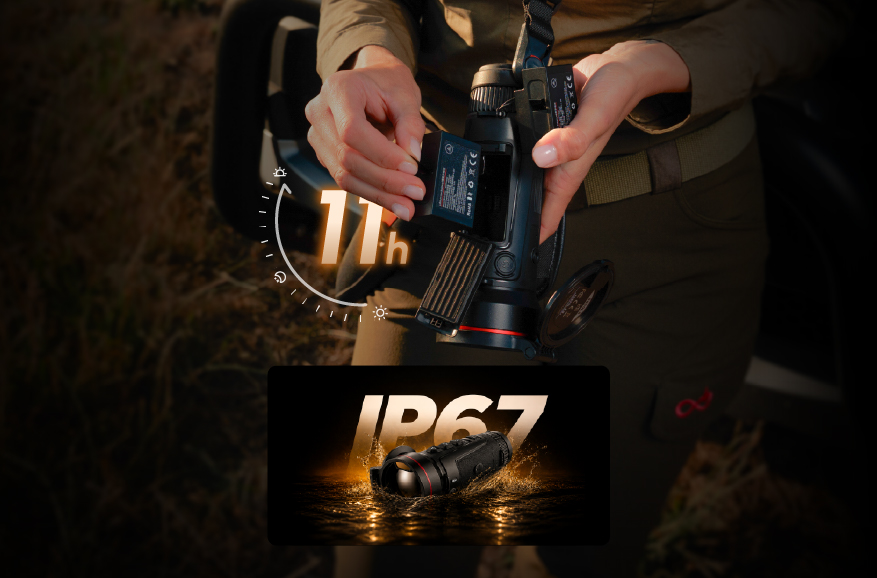
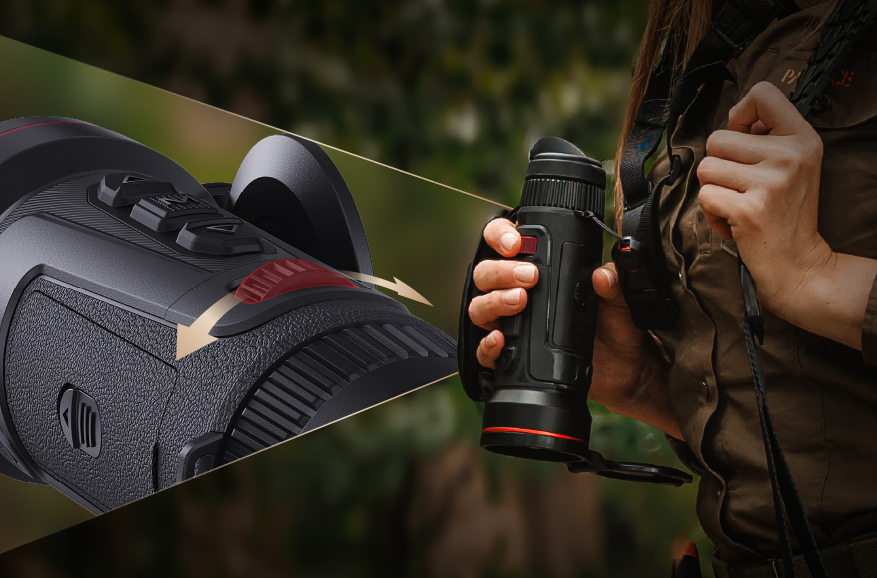
Battery life and controls also matter. An integrated LRF is most useful when it is easy to operate during real outdoor activities.
How the Guide Kodiak 3.0 Adds Practical Value
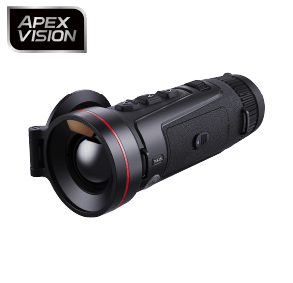
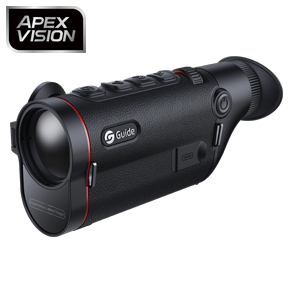
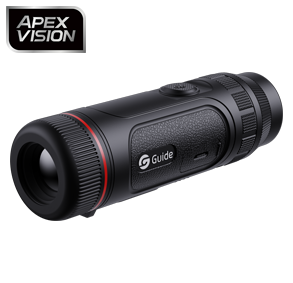
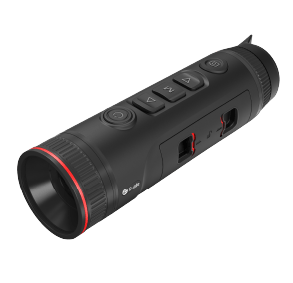
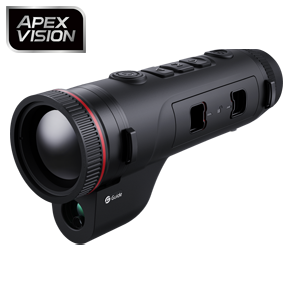
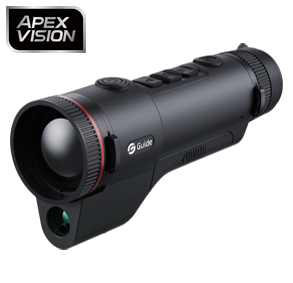
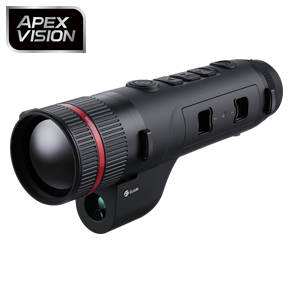
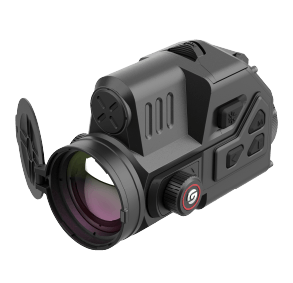
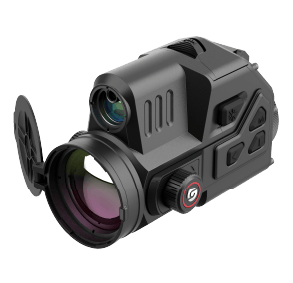
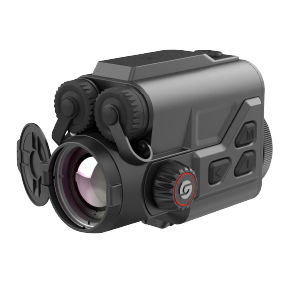
The Guide Kodiak 3.0 thermal imaging monocular features a compact, handheld design that integrates thermal observation capabilities with a built-in LRF. According to official specifications, the laser rangefinding function supports a maximum range of 1,200 meters.
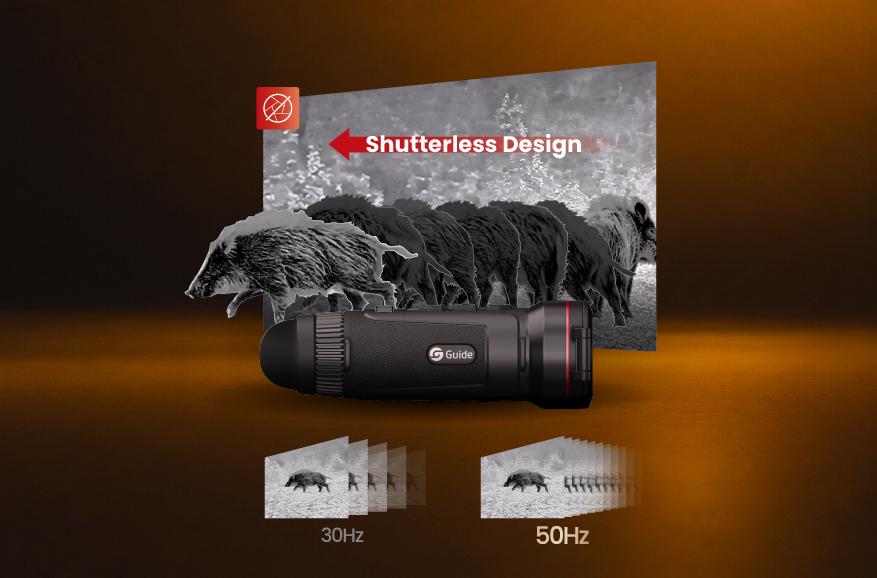
The series includes two models: the TK635L 3.0, equipped with a 35mm F0.9 lens, and the TK650L 3.0, featuring a 50mm F0.9 lens. Both models are powered by an infrared sensor with 640×512 resolution and a 12μm pixel pitch, offering a thermal sensitivity of 15mK, a 50Hz frame rate, and a 2560×2560 resolution AMOLED display. Their different lenses offer different fields of view and detection ranges, giving users options for different observation preferences.
For users who want both thermal target observation and direct distance measurement in one device, Kodiak 3.0 is an option to consider.
Conclusion
A thermal monocular with a built-in laser rangefinder is worth considering if you regularly observe wildlife across open fields, hunt in unfamiliar terrain or need direct distance readings during outdoor activities.
If you mainly scan familiar areas and rarely need to measure distance, a non-LRF thermal monocular may be sufficient.
The right choice depends on how often you need range information, the environments in which you use your device and your overall equipment budget. For those who want thermal observation and laser ranging in one compact unit, the Guide KODIAK 3.0 is an option worth exploring.