
.png)
.png)






How Thermal Sensors Work: From Microbolometer to Thermal Image
While thermal imaging products may appear to be simple cameras, the images displayed on their screens are the result of a far more complex process. At the heart of this process lies the thermal sensor, which detects infrared radiation and converts it into usable image data.
In uncooled thermal imaging systems, the most widely used technology is the microbolometer. This technology is extensively employed in thermal imaging cameras, monoculars, binoculars, scopes, inspection systems, and a wide range of other infrared products.
Understanding how a thermal sensor works helps explain why sensor design, readout electronics, calibration, and image processing all have a direct effect on final image quality.
What Is a Thermal Sensor?
A thermal sensor is a detector designed to measure the infrared radiation emitted by objects.
Unlike standard CMOS image sensors that mainly respond to visible light, thermal sensors operate within the infrared wavelength range. The sensor captures infrared energy from the scene and converts changes in that energy into electrical signals.
In uncooled systems, the detector does not require cryogenic cooling. This makes the systems more compact and easier to operate, making them suitable for portable thermal imaging products.
The sensor is therefore the starting point of the entire imaging chain.
What Is a Microbolometer?
A microbolometer is an uncooled thermal detector composed of many tiny sensing elements known as pixels.
Each pixel in a microbolometer responds to infrared radiation. When radiation reaches the detector, thermal energy changes the temperature of the sensing element, thereby causing a measurable change in its electrical properties.
Thousands or even hundreds of thousands of these detector elements can work together to create a thermal image.
The principle is simple:
Infrared radiation → Temperature change → Electrical response → Digital data
But achieving stable and accurate performance at this level requires careful semiconductor, materials, packaging, and circuit design.
From Detector Pixels to Electrical Signals
A microbolometer cannot directly produce the final image on its own.
The detector array first produces weak electrical signals. These signals must then be read out and converted into digital information.
This highlights the importance of the ROIC.
Connected to the detector array, the ROIC reads the response signals from individual pixels and helps manage the signal acquisition process.
Therefore, the quality of the detector alone is insufficient; the detector and the ROIC must be properly matched to ensure consistency in signal acquisition across the entire array.
This is one of the key areas of thermal sensor engineering.
Why Sensor Uniformity Is Crucial
Ideally, every pixel in a thermal detector should respond identically to the same infrared input. In practice, however, small differences exist between pixels.
These variations can lead to fixed-pattern noise or image non-uniformity.
Consequently, thermal sensor systems require Non-Uniformity Correction.
NUC compensates for differences between detector pixels, thereby enhancing image uniformity.
Calibration data, correction algorithms, and stable hardware design collectively underpin this process.
A strong thermal sensor is not simply sensitive. It also needs predictable and repeatable behavior across the whole detector array.
Temperature Stability and Thermal Calibration
Thermal sensors operate in an environment where the sensor itself can change with temperature.
Changes in ambient temperature, detector temperature, and internal electronics can affect the measured signal.
Therefore, thermal imaging systems require precise calibration.
An effective calibration design enables the system to distinguish between actual changes in the scene and signal changes caused by changes in the sensor's own characteristics.
This is particularly important for professional thermal imaging products that need stable performance across different operating conditions.
NETD and Thermal Sensitivity
One of the most important thermal sensor specifications is NETD.
NETD describes the smallest temperature difference a system can resolve under specific conditions. Lower NETD generally indicates better thermal sensitivity.
However, NETD is not determined by the detector material alone.
Factors such as detector design, readout circuitry, noise control, optical systems, signal processing, and calibration all influence the final result.
For this reason, evaluating the performance of a thermal imaging sensor requires considering the entire imaging chain, rather than relying on a single numerical value.
Image Processing Turns Sensor Data Into a Usable Picture
Raw sensor data is not the final thermal image that users see.
After the detector and ROIC capture the signal, image processing is used to enhance contrast, reduce noise, correct non-uniformity, and optimize the display.
Modern thermal imaging systems may use algorithms for image enhancement, bad-pixel correction, dynamic range management, and other processing functions.
This stage is crucial because the goal of thermal imaging is not simply to collect data. It is to turn that data into an image that users can interpret quickly.
Packaging and System Integration Also Matter
The development of thermal sensors extends beyond the detector wafer or pixel array.
The sensor must be packaged in a way that protects sensitive components while maintaining stable infrared performance.
Electrical connections, mechanical structure, thermal stability, optical alignment, and manufacturing consistency all affect the final module.
This is why thermal sensor development is a multidisciplinary engineering task involving detector technology, semiconductor circuits, materials, electronics, optics, software, and calibration.
From Microbolometer to Real-World Product
The complete path from detector to finished product can be summarized as:
Microbolometer array → ROIC → Signal conversion → Calibration → Image processing → Display
Each stage affects the final image quality.
A well-designed thermal imaging sensor delivers stable signal output, high sensitivity, and consistent pixel response, thereby laying a solid foundation for the entire thermal imaging system.
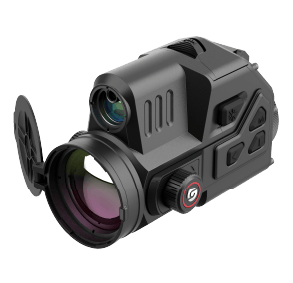
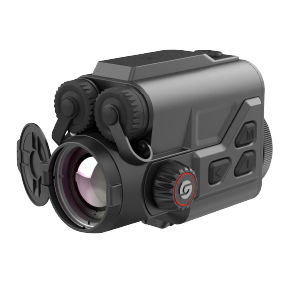
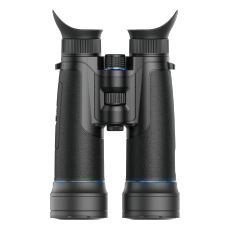
For thermal imaging scopes, monoculars, binoculars, and professional thermal cameras, this foundation directly supports practical image performance.
Companies that independently develop thermal imaging sensor technology can optimize the detector, electronic circuitry, calibration, and software as an integrated system, rather than handling these components in isolation.
Conclusion
A thermal sensor is much more than a component that “sees heat.”
In uncooled systems, the microbolometer detects infrared radiation, the ROIC captures the detector's response signals, the calibration process corrects sensor deviations, and image processing converts raw electrical signals into usable thermal images.
For manufacturers of thermal imaging equipment, these technologies represent far more than mere specifications on a datasheet; they are integral components of the product development and manufacturing processes.
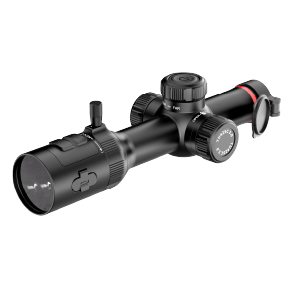
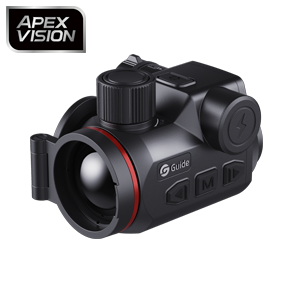
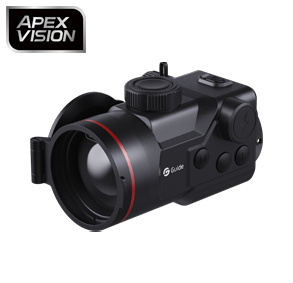
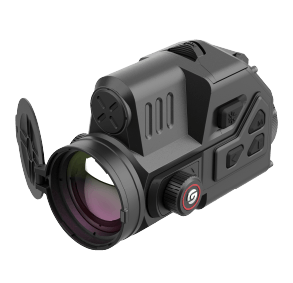
As a thermal imaging equipment manufacturer, Guide is responsible for developing and integrating core technologies, covering the entire process from sensor selection and readout circuit design to calibration, image processing, and finally, the complete thermal imaging product. This comprehensive manufacturing capability enables the company to optimize the entire imaging system for diverse applications, such as thermal imaging scopes, monoculars, and other specialized thermal imaging solutions.
The seamless integration of sensor technology, system development expertise, and manufacturing prowess forms the cornerstone of reliable thermal imaging products.